

Etor, a Ghanaian dish of mashed plantain or yam with palm oil, garnished with groundnuts and hard-boiled eggs.
Food in Ghana is more than sustenance; it is a social and cultural experience. Meals are often shared, with families and friends gathering around a common bowl or platter. Eating with the right hand, especially when enjoying fufu, banku, or TZ, is traditional and adds to the communal feel.
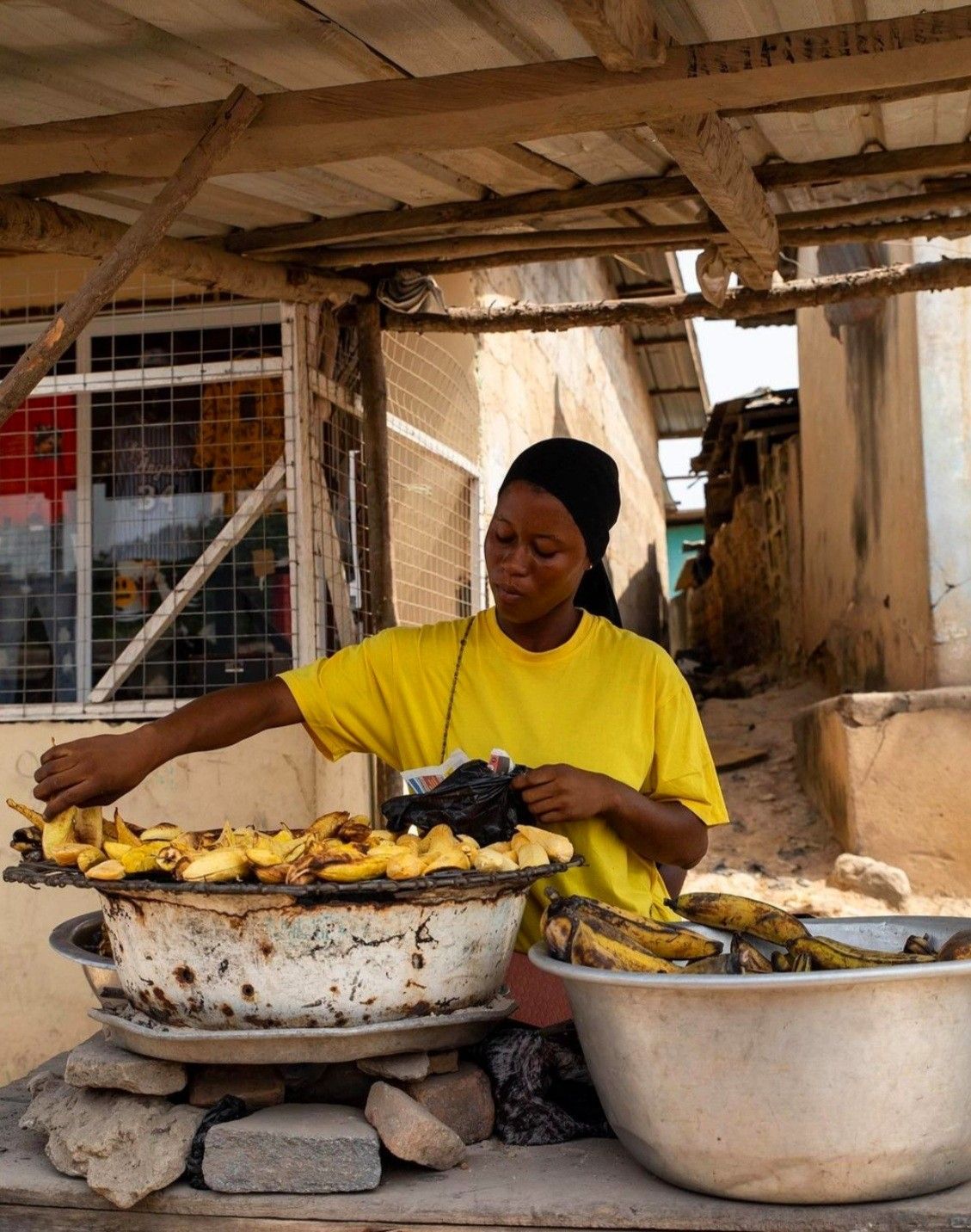
Breakfast might be koko or tombrown with koose, bread, or boiled eggs, while lunch and dinner center on a starch with soup or stew. Street food is integral to daily life: grilled tilapia with pepper sauce and onions, kelewele (spicy fried plantain), and bofrot are common snacks and quick meals.
Festivals, funerals, and celebrations feature special dishes and larger portions, reinforcing food’s role in marking important moments. Beverages range from local juices and soft drinks to spirits and traditional brews, often enjoyed alongside meals or during gatherings.
Ghanaian cuisine reflects the country’s diversity, with each ethnic group contributing unique dishes while sharing core ingredients and techniques. Whether in a home kitchen, a chop bar, or a roadside grill, the food tells a story of place, history, and community.